

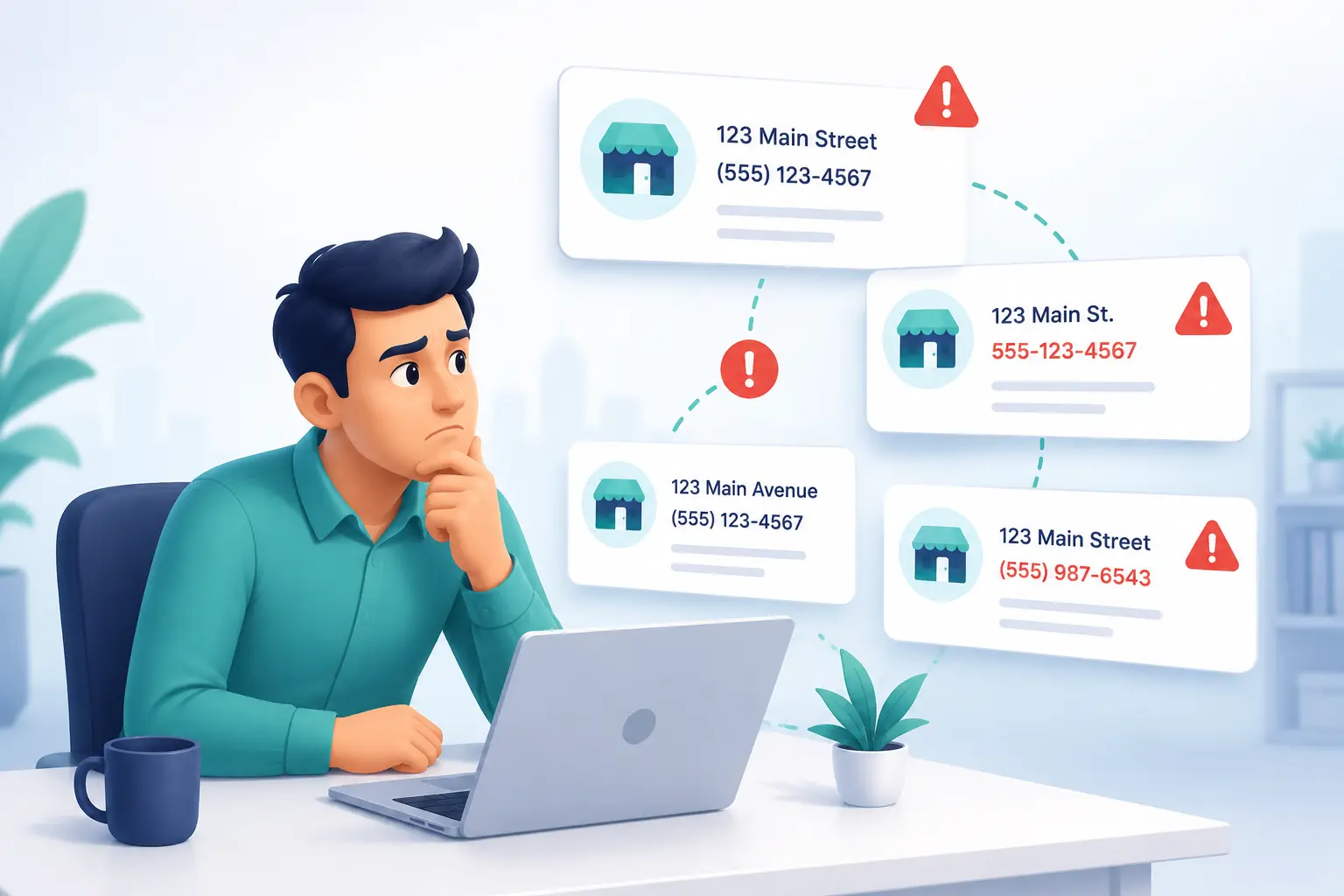
There are many citation mistakes you can make that will affect your rankings in local searches. These mistakes will cause Google’s algorithm to lose trust and devalue your business in rankings, mistrusting your business information, reducing authority, and splitting ranking potential. Stay with us to learn what the most common citation mistakes are that will kill your local SEO rank.
What Citation Mistakes Kill Your SEO Rank?
01. Inconsistent NAP Data
NAP (name, address, phone number) data is at the core of every listing, meaning that this data needs to be consistent throughout different directories in order to be able to support trust and legitimacy signals. Having inconsistent data may flag your profile and result in a Google Business Profile suspension.
What’s important to highlight here is that even the minor inconsistencies matter (St. vs Street, Ave vs Avenue, missing site number, local area code vs toll-free number, typos, and different versions of your business name, etc.). This is why creation and editing of citations need to be taken with great precision and care, to ensure all the data matches exactly across different directories. If that is not the case, you will be “punished” by a low search rank.
02. Duplicate Listings
Duplicate listings are easy to create. Some directories source and feed their platform automatically. Not checking whether you are already listed somewhere before you manually place a listing will result in duplicate listings. This can also be damaging to your search rank, since the authority and trust signals are split between the two instead of being accumulated in one.
This creates confusion not only with the search engines, but with customers as well, since they are no longer sure which data is accurate and which data should be followed. This is why businesses with duplicate listings are very often triggered by spam filters, which results in low rank and reduced online visibility.
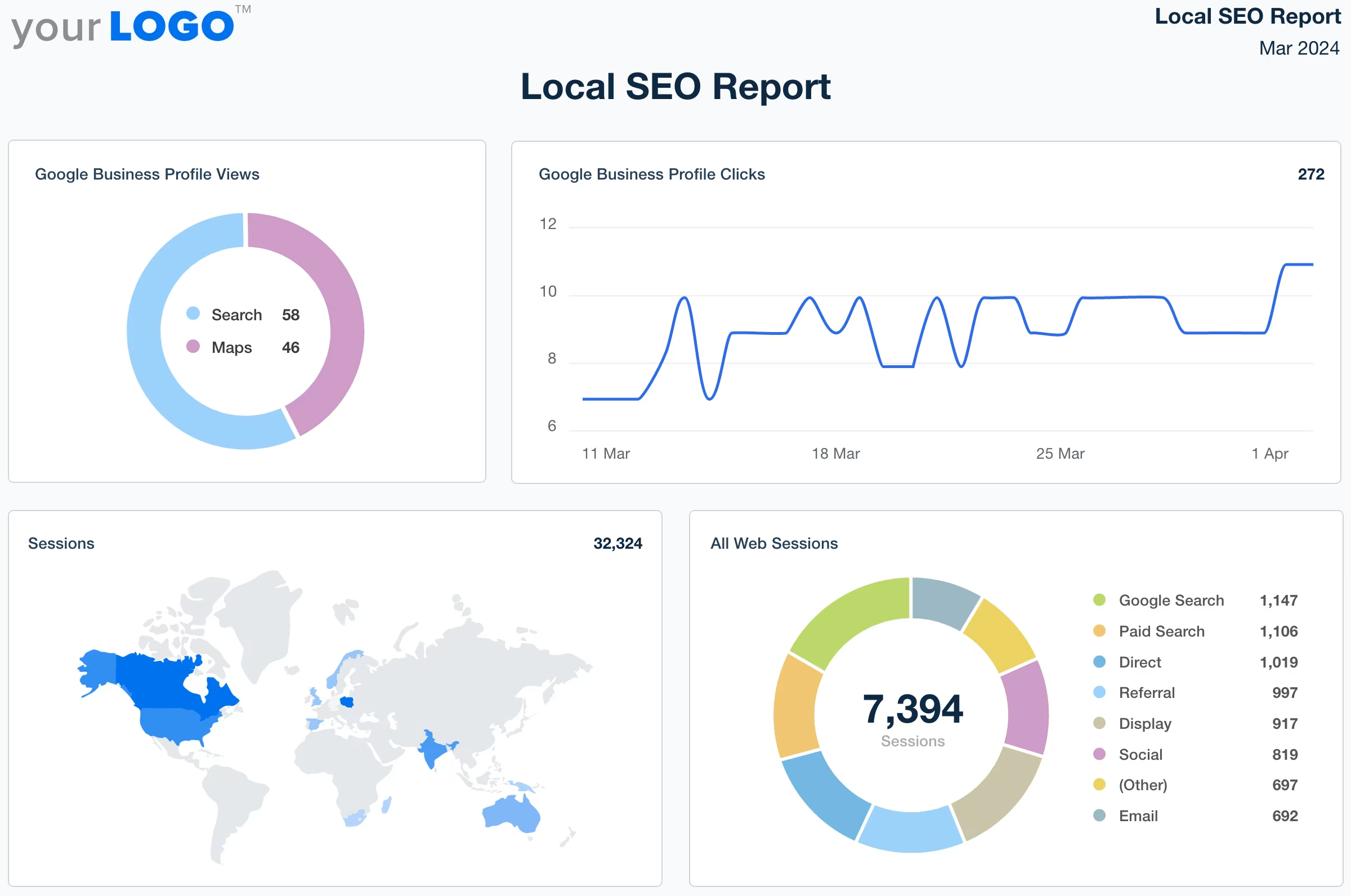
Client reporting is the backbone of our relationship with clients. Informative reporting builds trust with clients’ internal management and marketing teams, letting them know that data is accurate, useful, and can be broken down in an easy-to-understand and customized layout.
03. Outdated Information
Forgotten citations with data that’s not relevant or up-to-date can cause damage to your search rank. Old phone numbers or addresses, or changes to your business name that were not updated in the citations, can also create confusion and result in poor user experience and lower rankings.
Outdated citations happen when businesses don’t keep track of their citations, and simply don’t prioritize them in times of rebrands, business moves, change of ownership, and other important business events. Keeping track of all listings and updating them promptly will keep your business safe from making this mistake.
04. Low-quality Listings
Some businesses prioritize volume – placing their citations wherever possible, thinking they will increase visibility that way. The truth is that listings on low-quality and irrelevant directories can cause more damage than benefits. Some directories with spammy behaviour can also transfer those signals to your business, which can result in low rankings.
To avoid this mistake, it’s better to choose fewer directories of higher quality that are relevant to your business. This way, you are also ensuring your business is exposed only to the right customers, which usually results in higher traffic and conversion.
Save Time on Reports and Gain More Time for Strategy
Automate Client Reporting and Free Up Hours Every Month
05. Keyword Stuffing
The business name field is a box where you can enter whatever you want, and sometimes you may be drawn to the idea of inserting terms such as “the best services” or “affordable service” as a part of it. This practice is called keyword stuffing, and is not a part of Google’s guidelines, which means it will result in negative signals and eventual Google Business Profile suspension.
Another issue with keyword stuffing is connected to inconsistencies – if you tend to add different keywords to different directories, you will create inconsistencies in the data placed online, which will trigger the automated systems and flag your business.
06. Ignoring Reviews
Interaction is everything, so not replying to reviews and comments of your customers (even the negative ones) is seen as a negative practice since it signals a business’s inactivity. Also, it sends the wrong signals to potential customers, saying your business is unresponsive and unavailable to its customers.
To avoid making this mistake, make sure to track all the comments and reply to them promptly, within 24 hours of posting. This is what helps with engagement with your customers and contributes to generating fresh content on your listing.
07. Missing Business Categories
Categories are there to tell both directories and search engines what your business is about, which is why it’s important to choose the right primary one. Selecting the wrong category (the one that doesn’t reflect your core business) or leaving the field blank will limit the relevance of your business to search engines.
This mistake can be easily avoided by choosing the right category in your Google Business Profile (and it happens that this is one of the most influential search ranking factors for local search). On third-party directories, make sure to select the right category, so your business can be discoverable when someone applies filters on their pages.
Use a powerful keyword ranking report tool for intuitive, data-driven insights on your clients’ SEO. Try AgencyAnalytics free for 14 days. See the keyword ranking report template example.
08. Incomplete Listings
Starting to build a listing, but forgetting to complete it can result in a profile that’s incomplete. Even though this can look like a minor issue, it can actually cause trouble since the chances of rankings will be limited. Leaving out business hours, services you offer, description, or website URL can result in signaling incomplete information.
Once you start building a listing, finish it until the end. This is the only way you can ensure there will be no half-done citations that can cause further problems later on, once the effects start to accumulate.
How to Fix Citation Errors?
Noticing citation errors is not easy – you need to keep track of all listings, and to make sure they are maintained and kept updated. There are four ways to keep the citation errors to a minimum:
- Create a tracking file: Having a file that contains all essential data about your citations is a must – and it is the only effective way to keep all information in one place.
- Audit citations regularly: Make sure to audit all your citations regularly and to check for errors or duplicate listings.
- Standardize data: All your data should be consistent and standardized in the listings.
- Monitor regularly: Check regularly for new citations that may appear automatically on different directories.
The best way to fix citation errors is to prevent them. This can be done with regular inspection, monitoring, and updates of all essential data.
Conclusion
Having a successful citation strategy means you have to work on prevention as much as on distribution. Citation errors can slip at any time, so it’s important to keep an eye on all existing listings and to spot them before the search engine algorithm does. Local SEO brings many benefits when it’s done correctly, so make sure that you take time to prepare the citation strategy beforehand, to avoid spending resources on correcting the mistakes later on.